Archaeologists have found something that seems to interest them a lot right now. They have apparently found the world's oldest fossils which seem to be as old as 3.4 billion years old.
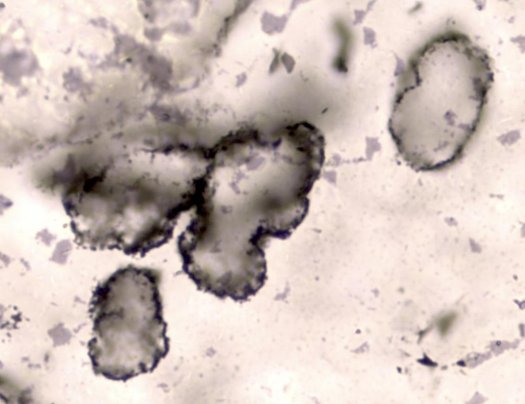
The fossilised remains of the oldest known lifeforms on Earth have been discovered in samples of rock collected near a remote watering hole in the middle of the Australian Outback.
The Strelley Pool Formation in Western Australia was once a beach, but is now more than 100 Km inland near(ish) the town of Marble Bar, and is popular among paleontologists because of the stromatolites preserved there.
According to a report in Nature, the structures spotted in black sandstone at the Strelley Pool appear to have biological origins. The researchers, led by University of Oxford paleobiologist Professor Martin Brasier, said the 5-80 micrometer structures show traces of cell walls and spherical, rod and ellipsoid shapes.
Scientists say their analysis of the microfossils clearly shows the organisms were processing sulphur for energy and growth - not oxygen.
The team says the microbe remains offer a fascinating insight into conditions on the ancient Earth.
The Strelley Pool Formation in Western Australia was once a beach, but is now more than 100 Km inland near(ish) the town of Marble Bar, and is popular among paleontologists because of the stromatolites preserved there.
According to a report in Nature, the structures spotted in black sandstone at the Strelley Pool appear to have biological origins. The researchers, led by University of Oxford paleobiologist Professor Martin Brasier, said the 5-80 micrometer structures show traces of cell walls and spherical, rod and ellipsoid shapes.
Scientists say their analysis of the microfossils clearly shows the organisms were processing sulphur for energy and growth - not oxygen.
The team says the microbe remains offer a fascinating insight into conditions on the ancient Earth.


