Showing posts with label Science. Show all posts

Antarctica is, in fact, a desert!

Posted by webber | Wednesday, January 04, 2012 | , | 0 comments »


Antarctica, as many of us know, is a continent around the South Pole, situated mainly within the Antarctic Circle and almost entirely covered by ice sheets.
Icy-continent-Antarctica
Antarctica is considered a desert, and here is why:

There is little precipitation in Antarctica since it is a polar region. It has neither lakes nor rivers and is actually the driest continent.

It is known as the world’s driest desert, because in its interior region the extreme cold freezes the water vapor out of the air.

Annual snowfall is equal to less than 5 centimeters of rain. Antarctica is also the only place in the world not claimed or owned by any country.

Zinc plays vital role in functionality of brain

Posted by webber | Sunday, October 09, 2011 | , , | 0 comments »


From the moment the scientists across the world established that the elevated attentiveness of several substance in synaptic vesicles, which is generally identified as an important portion of the neuron, which supplies neurotransmitters, till date the researchers have been trying hard to fix the role of zinc in the functioning of the brain.

Of late, zinc has made its presence felt in the medical arena both as a helper and a threat, if present in excess.

Now, scientists at the University of Toronto Scarborough (UTSC), and colleagues at MIT and Duke University have found that zinc plays a key role in regulating how neurons communicate with one another, and could affect how memories form and how we learn.

The researchers studied neurons in a brain region called the hippocampus, which is associated with learning and memory formation. They found that removing zinc interfered with a process called long-term potentiation, which strengthens the connection between two neurons, and is believed to be important for memory and learning.

Invisible alien planet discovered by Nasa's Kepler telescope

Posted by webber | Thursday, September 15, 2011 | , | 0 comments »


Scientists belonging to the Harvard University have made a claim that the universe is also home to two 'alien' planets, which they refer to as being 'invisible'.

Both the planets, known as Kepler-19b and Kepler-19c, were detected by NASA's Kepler space telescope which was launched in 2009 with an aim to hunt for alien worlds.

First, Kepler spotted 19b as it passed in front of, or transited, its host star. Then, scientists inferred the existence of 19c after observing that 19b's transits periodically came a little later or earlier than expected. The gravity of 19c tugs on 19b, changing its orbit.

The method used to discover Kepler-19c is only a few years old, it is a modern variation on the process used to identify Neptune.

Kepler, an Earth-orbiting space observatory responsible for finding hundreds of alien planet candidates, was launched in March 2009. It searches for planets by looking for dips in stars' light caused by planets passing in front of them.

The telescope's Holy Grail is to find an Earth-sized planet orbiting within the "habitable zone" of its star that would enable it to support liquid water, and possibly life.

"Although additional observations will be needed to achieve that milestone, Kepler is detecting planets and planet candidates with a wide range of sizes and orbital distances to help us better understand our place in the galaxy," NASA officials wrote in a statement.

Scientists discover our 'earliest' ancestors

Posted by webber | Saturday, September 10, 2011 | , | 0 comments »


Scientists in South Africa say they have discovered a potential missing link in the evolutionary chain, after they claim to have found the fossilised remains of our earliest ancestors.
2011-September-discovery-ancient-human-fossils
The ancient remains of two human-like creatures found in South Africa could change the way we view our origins.

Humans are thought to have descended from a creature called Homo erectus, which lived more than a million years ago, and it in turn was descended from more primitive species.

Palaeontologists have unearthed the remains of a primitive ape-like creature which they believe could be the man's earliest ancestor that lived almost two million years ago.

The hominin, named Australopithecus sediba, was discovered in a cave in South Africa and has been dubbed the "missing link" between apes and humans.

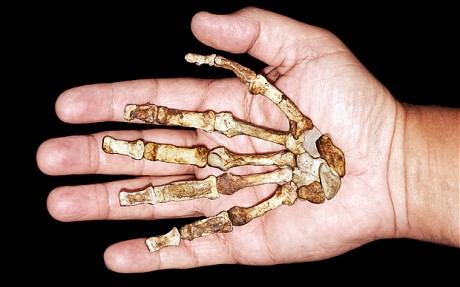
From head to toe, the bones reveal an unexpected patchwork of primitive and advanced traits, the researchers reported in the journal Science. The tiny skulls, long arms and diminutive bodies were all chimp-like; yet the hands, ankles and pelvis were surprisingly modern.

After examining A. sediba's anatomy, for instance, scientists think they may have evidence that the species was capable of making and using tools.

In addition, the team thinks it may have found samples of fossilized skin. If confirmed, the discovery would mark the first time any type of soft tissue has been recovered from an early human ancestor.
2011-September-human-evolution-chart
Uranium lead dating of the flowstone, conducted by the University of Melbourne, combined with palaeomagnetic analysis of sediments surrounding the fossils, conducted by La Trobe University, provide the tightly constrained new age.

The team was able to pin down the age of the fossils to within 3000 years of 1.98 million years, a massive advance on the age range of around 200,000 years from the 2010 estimate.

Scientists analysed the brain, pelvis, hands and feet of the Australopithecus sediba that existed around the same time when early Homo species first began to appear on the earth. The analysis shows that Australopithecus sediba had 'mosaic' nature of the hominin's features.

Whatever the correctness of the analysis, the creature certainly has a fascinating mix of features - some archaic, some modern.

Independent scientists describe the fossils as exquisite and utterly fascinating.

Strange marine fish now regarded as terrestrial creature

Posted by webber | Wednesday, August 31, 2011 | , | 0 comments »


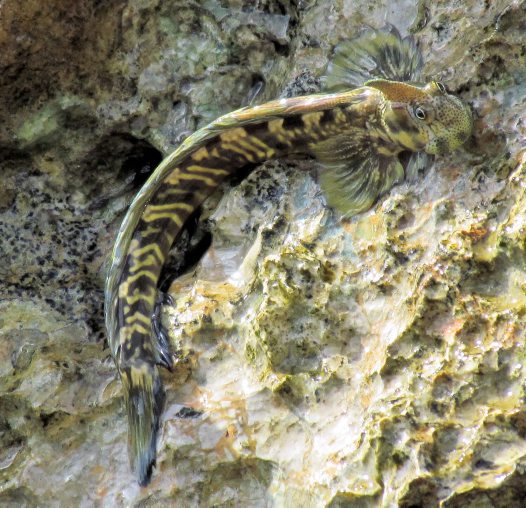
A new study has found that one of the world's strangest animals — a unique fish that lives on land and can leap large distances despite having no legs — has a rich and complex social life.
Strange-marine-fish-Pacific-leaping-blenny-Alticus-arnoldorum
Alticus arnoldorum is a species of combtooth blenny found in coral reefs in the Pacific ocean. It was first named by Curtiss in 1938, and is commonly known as the Pacific leaping blenny or the Leaping rockskipper.

The odd lifestyle of the Pacific leaping blenny (Alticus arnoldorum) has been detailed for the first time in research findings that throw new light on how animal life first evolved to colonise the land.

The Pacific leaping blenny is a marine fish in all aspects...except for the tiny detail that it spends all its time living on land. It could help us understand how the first animals colonized the land billions of years ago.

Adult blennies shelter in rock crevices at high and low tide, emerging only at mid-tide to feed, breed and socialize in surprisingly complex ways, Terry Ord of the UNSW Evolution and Ecology Research Center said.

The study has been published in the journal Ethology.

A high-tech 'kitchen garden' may be the answer to the worry about what astronauts may eat on a long journey to Mars.
2011-August-Mars-planet
Astronauts on the first manned missions to Mars could tend “kitchen gardens” of salad and vegetables onboard spaceships, scientists claim.

Maya R Cooper, a senior research scientist at the NASA Johnson Space Center in the Space Food Systems Laboratory in Houston, Texas, says that feeding astronauts could be one of the greatest challenges to the first manned mission to Mars.

Cooper explained that the challenges of provisioning space vehicles and Martian surface bases begin with tangible factors, such weight and nutrition, and encompass psychological nuances, such as providing a varied, tasty menu that wards off boredom.

Experts say the crops would not only give crews healthy food to eat during the long journey to the red planet, but would also improve the atmosphere onboard by producing oxygen and removing carbon dioxide.

These gardens, maintained by the astronauts, can give all the necessary fruits and veggies during the mission. The only weight added to the shuttle will be seeds. Currently, the list consists of lettuce, spinach, carrots, tomatoes, spring onions, radishes, peppers, strawberries, herbs and cabbage.

Space food has evolved from freeze-dried blocks and gooey messes - squeezable from toothpaste-like tubes - since the advent of space travel in the early 1960s. These days, astronauts are able to select their own menus in advance of the mission, which features rehydratable, thermostabilized, irradiated and natural form items, according to NASA's Web site.

A newly found mammal fossil pushes back the date when two lines of mammals diverged, researchers say. Scientists unearthed the 160-million-year-old fossil of a shrew-like mammal in northeast China.
2011-August-science-jurassic-fossil-discovery-mammal-history-redefined
Named the "Jurassic mother from China" (Juramaia sinensis), the newfound fossil species is the earliest known ancestor of placental mammals—animals, such as humans, that give birth to relatively mature, live young—according to a new study.

The small, furry placental mammal lived in what is now north east China during the Jurassic era when dinosaurs ruled the Earth.

Features of the creature clearly set it apart from marsupial mammals, which adopt a very different reproductive strategy.

The discovery pushes back the date the two groups took up their separate lines, according to Nature magazine.

Until now, the oldest known ancestor to placentals was a small mammal that dates back about 125 million years, to the Cretaceous period.

The new fossil has a well-preserved skull with all its teeth intact. Based on the teeth, the researchers determined that the mammal was more closely related to modern placentals than to modern marsupials.

"Because it lived 160 million years ago, and nobody was there to sign the birth certificate of its descendants, Juramaia could be our great grandmother 160 million years removed or it could also be our great grand aunt that represents a relative on the side lines," lead author Zhe-Xi Luo told Discovery News.

Luo, a Carnegie Museum of Natural History paleontologist, and his colleagues Chong-Xi Yuan, Qing-Jin Meng and Qiang Ji analyzed the well-preserved remains of the prehistoric animal, which was discovered in Liaoning Province.

Scientists led by an Indian-origin researcher have discovered a huge underground river which, they believe, is flowing some 13000 feet beneath the mighty Amazon River in Brazil.
2011-August-Amazon-Discovery
In an amazing discovery, scientists have found signs of an underground river flowing below the Amazon.

The Amazon basin covers more than 7 million square kilometres in South America and is one of the biggest and most impressive river systems in the world. But it turns out that - until now - we have only known half the story.

Researchers at the department of geophysics of the Brazil National Observatory have showed evidence of the existence of an underground river that flows 13,000 feet beneath the Amazon.
2011-August-Amazon-Discovery
The finding came from studying temperature variations at 241 inactive oil wells drilled in the 1970s by Brazil’s state-run oil company Petrobras, the Daily Mail reported.

Researchers decided to name the underground river the Hamza, in tribute to the scientist of Indian origin Valiya Mannathal Hamza, who has been studying the region for more than four decades.

It is believed the river originates from the region of Acre and reaches the sea at Foz do Amazonas, flowing through the basins of Solimoes, Amazona and Marajo.

Even though the two rivers cover a similar path they have differences. The underground river flows at a far slower pace and empties into the ocean deep underground.

The findings were presented recently at a meeting of the Brazilian Geophysical Society in Rio de Janeiro.

In what could be called a gem of a discovery, astronomers claim to have found a planet entirely made of diamonds.
2011-Aug-Scientists-Find-Diamond-In-Space
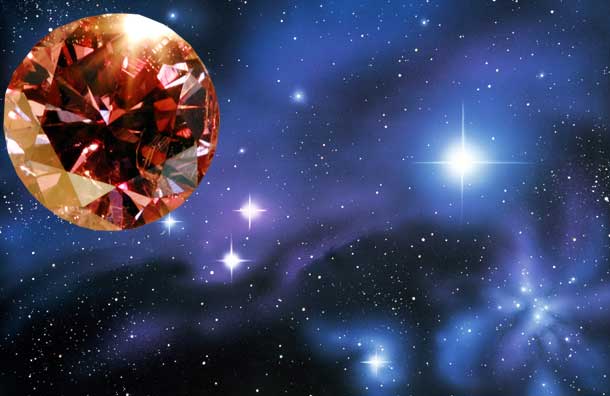
An international team of astronomers, led by Australia's Swinburne University of Technology professor Matthew Bailes, has discovered a planet made of diamond crystals, in our own Milky Way galaxy.

But, at 4,000 light years from Earth, it is out of human reach - for now.

The odd planet was discovered orbiting what's known as a millisecond pulsar — a tiny, fast-spinning corpse of a massive star that died in a supernova.

Pulsars are highly magnetized, rotating neutron stars that emit a beam of electromagnetic radiation. The radiation can only be observed when the beam of emission is pointing towards the Earth.

The new planet is far denser than any other known so far and consists largely of carbon. Because it is so dense, scientists calculate the carbon must be crystalline, so a large part of this strange world will effectively be diamond.

"The ultimate fate of the binary is determined by the mass and orbital period of the donor star at the time of mass transfer. The rarity of millisecond pulsars with planet-mass companions means that producing such exotic planets is the exception rather than the rule, and requires special circumstances," said Benjamin Stappers from the University of Manchester.

Astronomers estimate that the newfound planet is 34,175 miles (55,000 kilometers) across, or about five times Earth's diameter.

Get to know what Coriander oil can cure

Posted by webber | Thursday, August 25, 2011 | , , | 0 comments »


Coriander oil could be used to cure a host of infections including food poisoning and the superbug MRSA, say researchers.
coriander-oil-cure
Coriander (Coriandrum sativum) is an annual herb in the family Apiaceae. Coriander is native to southern Europe and North Africa to southwestern Asia. It is a soft, hairless plant growing to 50 centimetres (20 in) tall.

A team of researchers at the University of Beira Interior, Portugal, found coriander to be toxic to a broad range of harmful bacteria.

The scientists tested samples of the oil — taken from the seeds of a coriander plant — against 12 bugs and found that their growth was reduced significantly.

More importantly, most of the bacteria were killed by a solution containing less than 1.6 per cent of the oil, the Daily Mail reported. According to the researchers, the oil attacks and kills the outer membrane of bacteria cells, including salmonella, E.coli and MRSA.

This study not only shows that coriander oil also has an antibacterial effect, but provides an explanation for how it works, which was not previously understood.

The long-missing parent yeast of lager beer was discovered newly, and is believed to have sailed from Patagonia in South America, taking a 7000-mile journey to Bavaria, the birth place of the most popular alcoholic beverage of today.
lager-beer-2011-August
Lager is a type of beer made from malted barley that is brewed and stored at low temperatures. There are many types of lager; pale lager is the most widely-consumed and commercially available style of beer in the world; Pilsner, Bock, Dortmunder Export and Märzen are all styles of lager.

Yeasts are microscopic fungi that feast on sugar, converting it to carbon dioxide and alcohol via the process of fermentation.

German lager yeast appears to have originated on beech trees in southern Argentina. But how did it get to Europe 600 years ago?

Scientists have identified a yeast that led to the discovery of lager.

The researchers isolated the new species in the frozen forests of Patagonia in South America.

Their discovery suggests that this yeast crossed the Atlantic hundreds of years ago and combined with one traditionally used in Europe to make ale.

The discovery is described in the Proceedings of the National Academy of Sciences.

Credit for the discovery of this wild yeast goes to Diego Libkind of the Institute for Biodiversity and Environment Research in Bariloche, Argentina, who was interested in the ball-shaped lumps of sugar that form on beech trees there.

The lumps, called galls, are an immune response to invasion by a fungus. They are abundant in the spring and local Aborigines such as the Mapuche traditionally use them as a slightly-sweet topping for salads.

Archaeologists have found something that seems to interest them a lot right now. They have apparently found the world's oldest fossils which seem to be as old as 3.4 billion years old.
Fossil-microbes-discovered-Australia-2011-August
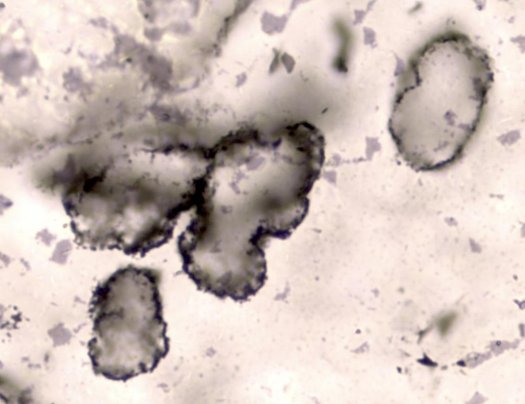
The fossilised remains of the oldest known lifeforms on Earth have been discovered in samples of rock collected near a remote watering hole in the middle of the Australian Outback.

The Strelley Pool Formation in Western Australia was once a beach, but is now more than 100 Km inland near(ish) the town of Marble Bar, and is popular among paleontologists because of the stromatolites preserved there.

According to a report in Nature, the structures spotted in black sandstone at the Strelley Pool appear to have biological origins. The researchers, led by University of Oxford paleobiologist Professor Martin Brasier, said the 5-80 micrometer structures show traces of cell walls and spherical, rod and ellipsoid shapes.

Scientists say their analysis of the microfossils clearly shows the organisms were processing sulphur for energy and growth - not oxygen.

The team says the microbe remains offer a fascinating insight into conditions on the ancient Earth.

Darkest known planet discovered by astronomers

Posted by webber | Saturday, August 13, 2011 | | 0 comments »


Astronomers have discovered what they claim is the darkest known planet -- a distant, Jupiter-sized gas giant known as TrES-2b.

An international team says the exoplanet reflects less than 1 per cent of light, which makes it blacker than coal or any planet or moon in our solar system, the 'Monthly Notices of the Royal Astronomical Society' reported.

NASA's Kepler spacecraft detected it lurking around the yellow sun-like star GSC 03549-02811 some 750 light years away in the direction of the constellation Draco.

The dark planet lies in the field of view of the Kepler space telescope, whose primary mission is to spot exoplanets using extremely sensitive brightness measurements as far-flung worlds pass in front of their host stars.

First spotted five years ago, TrES-2b races around its star at a distance of just five million kilometers (three million miles).

This is scorchingly close when compared to Earth's 150 million kilometers (93 million miles) distance from the sun and Jupiter's 778 million kilometers (483 million miles).

In what appears to be seriously big news from a team of NASA-funded researchers, scientists have found evidence that some building blocks of DNA--including two of the four nucleobases that make up our genetic code--found in meteorites were created in space, lending credence to the idea that life is not homegrown but was seeded here by asteroids, meteorites, or comets sometime in Earth’s early lifetime.
DNA-building-blocks-meteorites-life-chemicals
Life on Earth may have its origins in outer space, according to Nasa research.

Scientists have analysed meteorites that formed billions of years ago before falling to Earth.

For 50 years, scientists have debated whether the components of DNA — the molecule central to all life on Earth — could spontaneously form in space. A new analysis of a dozen meteorites found in Antarctica and elsewhere presents the strongest evidence yet that the answer is yes.

Meteorites are space rocks that have fallen to the ground, and the new report bolsters the notion that heavy meteorite bombardment of the early Earth may have seeded the planet with the stuff of life.

The discovery has added to a growing body of evidence that the chemistry inside asteroids, meteorites and comets is capable of making building blocks of essential biological molecules.


Giant birds as big as an Ostrich lived among dinosaurs

Posted by webber | Wednesday, August 10, 2011 | | 0 comments »


An enormous jawbone found in Kazakhstan is further evidence that giant birds roamed - or flew above - the Earth at the same time as the dinosaurs.

Palaeontologists have found the fossilised remains of a giant bird that lived in central Asia more than 65 million years ago, a finding that challenges theories about the diversity of early birds.

The creature may have been taller than an ostrich if it had been flightless and, if it flew, had a greater wingspan than that of the albatross, they reported in the British journal Biology Letters.

The bird, called Samrukia nessovi after the mythical Kazakh Phoenix, lived in what is now Kazakhstan.

"In fact, these big birds fit into the idea that the Cretaceous wasn't 'a non-avian dinosaurs-only theme park.' Sure, non-avian dinosaurs were important and big in ecological terms, but there was at least some space for other land animals," lead author of the paper, Darren Naish said in a report by Discovery News.

The findings were based on all that's left of the animal, a toothless lower jaw found in Late Cretaceous sediment in Kyzylorda, southern Kazakhstan.

Studies try to find where does the intelligence come from

Posted by webber | Wednesday, August 10, 2011 | , | 0 comments »


DNA research suggests genetic differences could account for up to half the difference in individuals' intelligence. Researchers have found that up to half of our intelligence (or lack of it) is inherited.
Intelligence-DNA-2011-August-genes-study-research
Previous family and twin studies strongly suggest that many characteristics of intelligence are inherited, but no specific genes or gene variants have been linked with intelligence traits.

The international team, led by Ian Deary of the University of Edinburgh in Scotland and Peter Visscher of the Queensland Institute of Medical Research in Brisbane, Australia, compared the DNA of more than 3,500 people, middle aged and older, who also had taken intelligence tests. They calculated that more than 40% of the differences in intelligence among test subjects was associated with genetic variation.

Past research had suggested that bright parents tend to have bright kids. However, the extent to which genetics contributes to intelligence, as opposed to other contributing factors such as environment, has been hotly debated.

No single gene variant has yet been identified as reliably linked with intelligence. Instead, scientists investigated the potential role of many common genetic variations on human intelligence.

In the new study, investigators found that many different gene variants with small individual effects are involved in human intelligence. But the scientists still couldn't pinpoint the specific genes involved.

"It's been kind of a shock to the system that it hasn't worked," said psychologist Eric Turkheimer at the University of Virginia, who had no role in the study. "We can't find the effects of any individual genes that are large enough to seem worth worrying about."

Monsanto Co. (MON), the world's biggest vegetable seed maker, said it will begin selling genetically modified sweet corn in the US this year, the first product it has developed for the consumer market.
Monsanto-genetically-engineered-sweet-corn
The sweet corn seeds are engineered to kill insects living above and below ground and to tolerate applications of the company’s Roundup herbicide, Consuelo Madere, Monsanto vice president for vegetables, told reporters at company headquarters in St. Louis. They will be introduced to growers serving the U.S. fresh corn market starting in the autumn, she said.

Monsanto produces a wide range of seeds and develops biotechnology traits that assist farmers in controlling insects and weeds as well as provides other seed companies with genetic material and biotechnology traits for their seed brands. Now, the company has developed its first product for the consumer market.

The Creve Coeur-based company said the corn would be available in limited markets, but did not specify where. The corn will be sold under the Seminis brand, which Monsanto purchased in 2005.

The company, however, will not use the Monsanto brand to advertise the new line of sweet corn.

Though this is Monsanto's first biotech vegetable launch, Madere said other companies have already brought genetically altered vegetables to market and she did not anticipate significant consumer backlash.

"This is our first launch. We think it is a good product and we'll work to make sure we educate folks to the benefits," she said.

Giant Sausage Skin claimed to cure diabetes

Posted by webber | Monday, August 08, 2011 | , , | 0 comments »


British scientists have developed an implanted sleeve that looks like a giant sausage skin, which they claim can cure diabetes.

A team, led by Dr. John Mason of the Trafford Healthcare National Health Service Trust U.K., says that the two-feet-long device can reverse diabetes within weeks — in fact, it acts as an incision-less alternative to a weight loss surgery known as duodenal switch.

The duodenum is the name for the first 10 to 12in of the small intestine, which attaches to the stomach.

A duodenal switch is a keyhole procedure that involves making two incisions at the start and end of the duodenum. The lower part of the intestine is attached to the stomach, forming a new pathway.

Food then bypasses most of the duodenum, which limits absorption.
Long-term risks include hernia and bowel obstruction.

The device, the EndoBarrier, is designed to have the same effects as surgery but is far safer. It is a plastic sleeve that lines the duodenum, meaning food can only be absorbed lower down the intestine.

However, the procedure is performed under anesthetic, which is less than an hour and the sleeve made from a thin plastic is inserted through the mouth then passed into the digestive tract with a thin tube. Once it’s placed, a ‘sprung titanium anchor’ stops it from slipping out and it is taken out after a year.

In the research, the researchers discovered that in obese patients with diabetes, the disease was excluded, and at first the experts were of the belief it came as a result of weight loss, though many patients were able to stop their diabetes medication before they began losing weight.

The discovery has led to clinical trials at three British hospitals, which found the implant also lowers cholesterol levels and blood pressure.

Planetary scientists claim to have for the first time spotted a thin band of anti-matter particles, called anti-protons, enveloping the Earth.
planet-earth
The find, described in Astrophysical Journal Letters, confirms theoretical work that predicted the Earth's magnetic field could trap antimatter.

A team of more than 60 researchers identified signs of antiprotons in the Van Allen belt using data from the Payload for Antimatter Matter Exploration and Light-nuclei Astrophysics (Pamela) satellite.

The team says a small number of antiprotons lie between the Van Allen belts of trapped "normal" matter.

Cosmic rays bring our planet a steady stream of protons, electrons, and other particles. As these collide with nuclei in the upper atmosphere, they create new particles, including antiprotons. And some of this antimatter is sticking around above our world.

The discovery could help manking to explore the stars, with some researchers believing that the belt of antimatter could be used as a source of fuel.

Western Ghats - New species of frogs found

Posted by webber | Sunday, August 07, 2011 | , , | 0 comments »


New species of frogs were discovered by a team of bio-diversity researchers led by Dr. Anil Zachariah, Veterinary Surgeon, Dept of Animal Husbandry, during their recent exploration in the Western Ghats.
2011-August-new-frog-species-Western-Ghats
A team headed by Dr Anil Zachariah, a renowned scientist, has discovered 10 new species of frogs from the hill ranges of Southern Western Ghats with the help of Zoological Survey of India.

The discovery has been published in the latest issue of Biosytamatica, an international journal on animal taxonomy, ecology and zoogeography. Of the 10 species, nine species of frogs belong to the Raorchestes genus.

The remaining one belongs to the Polypedates genus under the family Rhacophoridae. One species in the Raorchestes genus has been named Raorchestes agasthyaensis, after the Vedic sage Agastya, while Raorchestes manohari is named after principal chief conservator of forests T.M. Manoharan.

The distribution of frogs ranges from tropic to subarctic regions, but most species are found in tropical rainforests. Consisting of more than 5,000 species described, they are among the most diverse groups of vertebrates. However, populations of certain frog species are declining significantly.

The discovery shows that the Western Ghats, a biodiversity hotspot, still has many new species of amphibians waiting to be discovered.

The Western Ghats or Western Ghauts (Marathi/Konkani: सह्याद्री, Kannada/Tulu: ಸಹ್ಯಾದ್ರಿ, Malayalam: സഹ്യാദ്രി / സഹ്യപര്‍വതം, Tamil: மேற்குத் தொடர்ச்சி மலைகள்) also known as the Sahyadri Mountains, is a mountain range along the western side of India. It runs north to south along the western edge of the Deccan Plateau, and separates the plateau from a narrow coastal plain along the Arabian Sea.